
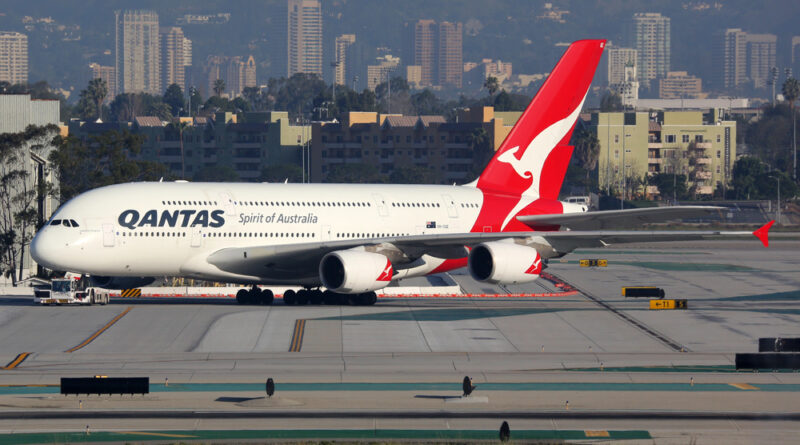
Qantas cyber-attack highlights looming AI and quantum threat to Australian businesses
Qantas Airways’ disclosure of a breach affecting up to 5.7 million customers has underscored a growing warning from cybersecurity experts: conventional defences are being outpaced by artificial-intelligence-driven attacks today, and quantum-powered code-breaking is on the horizon.
What happened
The airline detected “unusual activity” on a third-party customer-service platform in late June. An intrusion quickly escalated, exposing phone numbers, birth dates and addresses for more than a million travellers, with basic contact details for several million more. Investigators say payment cards and passports were not compromised, but Qantas acknowledges that attackers may seek to monetise the trove through phishing or identity theft while the probe continues.
Why this breach matters
| Risk factor | Current impact | Emerging impact |
|---|---|---|
| AI-enabled attacks | Deep-fake videos and hyper-real phishing emails now target staff and customers alike. | Automated malware that self-optimises against security tools. |
| Quantum computing | Mostly theoretical, but proof-of-concept rigs already exist. | Once machines scale, today’s public-key encryption could be cracked in hours, laying bare everything from loyalty programmes to health records. |
| SME exposure | Smaller firms lack in-house cyber talent and still rely on legacy systems. | A two-speed economy emerges, well-resourced enterprises adopt quantum-resilient tech, others fall behind. |
The bigger picture
-
Converging technologies: AI speeds up intrusion tactics, quantum will obliterate many of the cryptographic locks that protect data in transit and at rest.
-
Economy-wide stakes: With 97 per cent of Australian firms classed as small or medium, a single quantum-enabled worm could cripple supply chains and payment networks overnight.
-
Digital disaster preparedness: Security analysts argue that Australia should apply the same coordinated planning used for bushfires to “cyber storms”, pooling public and private resources to harden critical infrastructure and subsidise quantum-safe upgrades for SMEs.
What experts recommend now
-
Inventory and segment data: Identify high-value assets and isolate them from routine systems.
-
Adopt post-quantum crypto pilots: Begin testing NIST-endorsed lattice-based algorithms for internal communications and backups.
-
Leverage shared services: Outsource monitoring and threat hunting to managed security providers that can scale AI analytics across thousands of endpoints.
-
Upskill staff: Run regular training on deep-fake detection and social-engineering red flags, human awareness is still the first line of defence.
-
Engage regulators: Push for incentives, tax credits or grants, to accelerate quantum-resilient adoption nationwide.
Looking ahead
Titanic shifts in processing power rarely give second chances. The Qantas breach is a live-fire exercise, demonstrating how AI already amplifies criminal reach. When quantum capability matures, analysts estimate within five to seven years, today’s best-practice encryption will resemble a screen door against a cyclone. Australian businesses, particularly the nation’s two-million-plus SMEs, have a narrowing window to future-proof their defences.
“Digital trust could become one of Australia’s most valuable exports,” one venture investor noted, “but we need to treat quantum-safe security as essential infrastructure, not a luxury.” The race is on to ensure that another data-breach headline isn’t the lesson learned too late.
Photo Credit: DepositPhotos.com