Espionage in the Age of AI: How North Korea Turned the Global Tech Industry into a Billion-Dollar Laundering Machine
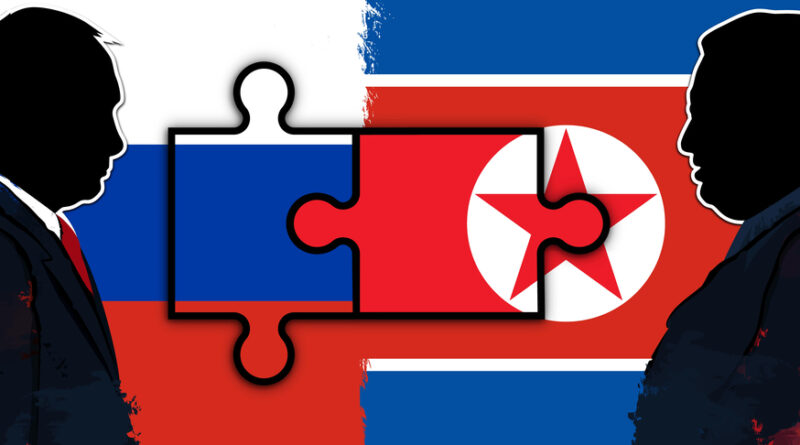
It sounds like a thriller plot—agents from one of the world’s most isolated nations infiltrating Western corporations through fake résumés, AI-altered headshots, and Zoom interviews. Yet this story is no fiction. Across the digital expanse of remote work, thousands of North Korean IT specialists have quietly embedded themselves inside some of the world’s most prominent companies. Their mission is not espionage in the cinematic sense, but something far more insidious: funneling corporate salaries and intellectual property back to Pyongyang’s nuclear weapons program.
The Invisible Workforce
For years, Western intelligence agencies treated cyberattacks as North Korea’s primary economic weapon—ransomware heists, crypto theft, and bank breaches carried out by state-sponsored hacker groups like Lazarus. But a quieter, more sophisticated scheme has taken root. Thousands of North Korean men trained in software development, data engineering, and cybersecurity now pose as freelancers or remote employees for companies across the U.S., Europe, Australia, and the Middle East.
They are not hiding behind keyboards in Pyongyang. Most operate from shared apartments in China, Russia, or Southeast Asia, where they build convincing digital identities. They fabricate portfolios, steal or purchase legitimate American credentials, and use AI tools to generate fluent English and polished interview scripts. Their faces—blurred, enhanced, or entirely AI-generated—appear in Zoom calls with unsuspecting managers.
Once hired, these workers act like any remote employee. They log into company systems, write code, attend meetings, submit deliverables, and collect salaries. But behind the professional facade lies a coercive machine: up to 90 percent of their earnings are confiscated by North Korea’s ruling regime. The rest—barely enough to survive—serves as the only lifeline for their families, whom the state uses as collateral.
A Billion-Dollar Enterprise
According to estimates from the FBI and the United Nations, this digital labor network has generated between $250 million and $1 billion over the past five years. The funds directly support Kim Jong-un’s nuclear weapons and ballistic missile programs, allowing Pyongyang to sidestep the global sanctions designed to starve them.
The workers’ reach spans industries: aerospace, banking, healthcare, and even municipal architecture. One investigative firm found evidence of North Korean operatives drawing up blueprints for Western construction projects. Others have worked for cryptocurrency startups, writing smart contracts that may later have been exploited for theft.
The FBI has labeled the infiltration a “code red” for national security. Companies, often unaware they’ve employed sanctioned North Korean citizens, face not only reputational damage but potential legal exposure for breaching international sanctions. Yet tracing and prosecuting these cases has proven immensely difficult. Remote work blurs jurisdictional boundaries, and the agents use AI to constantly reinvent their digital fingerprints.
From Freelancers to Slaves
While the operation funds Pyongyang’s military ambitions, it also exposes a tragic paradox. The same men perpetrating these deceptions are themselves victims of the system they serve. Many are forcibly relocated from North Korea and live under military supervision in crowded dormitories, working up to 14 hours a day. Their “bonuses” depend on how much money they can extract from foreign employers. Failure means beatings, imprisonment, or worse—reprisals against their families back home.
South Korean human rights groups describe the system as “modern slavery under digital disguise.” It’s a chilling inversion of the gig economy: a workforce coerced not by market forces, but by dictatorship.
The cruelty extends to the smallest details. Files leaked from internal North Korean communications show that managers track workers’ productivity down to daily hours logged. Even their recreation is regimented—on Sundays, the men are ordered to play volleyball, and the results are recorded in spreadsheets as proof of morale.
A Perfect Storm of Technology and Desperation
The COVID-19 pandemic and the remote work revolution created ideal conditions for the scheme’s expansion. With physical offices closed and online recruitment surging, verification standards eroded. A résumé backed by a LinkedIn profile and an American address was often enough to secure a contract.
Artificial intelligence supercharged the deception. Tools like Anthropic’s Claude AI have been used to write code, craft cover letters, and even generate human-like small talk. Some of the infiltrators, investigators discovered, lack the technical skill they claim to possess. AI fills in the gaps, enabling them to perform convincingly in technical roles.
The irony is sharp: Western innovation has empowered one of the world’s most repressive regimes. AI, meant to enhance productivity and creativity, has instead become a weapon of economic subversion.
The Human Accomplices
North Korea’s agents do not act alone. A network of Western intermediaries—some complicit, others desperate—assist in the scam. These “laptop farmers” lend their identities and hardware to make the deception possible. In the U.S., one woman in Arizona helped 311 fake employees secure remote jobs using 68 stolen identities, netting over $17 million in salaries. She is now serving an 8.5-year prison sentence.
Some accomplices are motivated by greed. Others are lured by quick cash: a few hundred dollars to “rent” their name or a company laptop. Recruiters have been known to target debt-ridden individuals on online forums, exploiting their financial distress. The scam thrives not just on technology, but on human vulnerability.
Corporate Blind Spots
Even the most security-conscious corporations have fallen victim. Nike disclosed in court filings that one of its contractors was a North Korean operative, hired under a false identity through an American intermediary. Other Fortune 500 firms have been similarly compromised but remain silent, fearing regulatory fallout.
Experts believe between 1,000 and 10,000 North Korean IT workers are currently embedded in global companies. They blend in through tireless work habits and a culture of compliance that fits seamlessly into Western corporate expectations. Managers praise their punctuality, their willingness to work late, their quiet professionalism—all traits that mask the coercion behind the screen.
There’s an uncomfortable truth here: the global economy rewards relentless productivity. In a world where overwork is celebrated, North Korea’s forced laborers appear as model employees. The very system that prizes efficiency has made room for exploitation to thrive undetected.
The Digital Smokescreen
Researchers trying to track the infiltration have uncovered patterns—linguistic quirks, cultural tics, even meme choices. North Korean workers favor British spellings, overuse exclamation marks, and often choose Minions avatars for chat apps. Yet the biggest advantage they wield is anonymity. Remote work has turned every home office into a potential front line of international espionage.
FBI raids on American “laptop farms” have revealed the scope of the problem, but the operation is hydra-headed. Every time one network is dismantled, another emerges overseas. China and Russia, where many North Korean agents operate, show little interest in enforcing sanctions.
The Next Frontier of Espionage
The infiltration of corporate tech infrastructure marks a new kind of cold war—one fought not with spies in trench coats but with keyboards and conference calls. Unlike traditional espionage, this campaign blurs the boundary between theft, labor, and warfare. The same line of code that powers a company’s app could help fund a missile test over the Sea of Japan.
In the long term, the scheme raises profound questions about globalization and digital trust. How can companies verify the identity of someone they will never meet in person? How can governments enforce sanctions in a borderless economy where money moves at the speed of software?
There is also a moral reckoning at stake. The world has long debated the ethics of supply chains tainted by forced labor in factories. Now, those same concerns extend to the cloud—to the unseen hands coding our apps, securing our networks, and shaping our digital lives.
The Shadow Economy of Obedience
What makes the North Korean scheme so effective is not just deception, but devotion. Even defectors who have escaped the system admit that the regime’s indoctrination runs deep. Loyalty to the Supreme Leader is woven into every act, even fraud committed abroad. To betray the mission is to betray one’s family and nation.
That ideological grip, fused with technological opportunism, has made North Korea a quiet superpower in cyber-enabled finance. For every missile test that captures headlines, there are hundreds of invisible keystrokes sustaining it.
The chilling reality is that espionage no longer looks like espionage. It looks like a remote developer on Slack, asking for a project update. It looks like an engineer’s paycheck routed through a VPN. It looks like the ordinary rhythm of modern work—except that, somewhere in Pyongyang, a nuclear warhead grows closer to completion.
In the end, the story of North Korea’s hidden IT army is not only about cybersecurity. It’s a mirror held up to the global economy itself, revealing just how fragile our digital trust has become—and how easily it can be weaponized in the wrong hands.
Photo Credit: DepositPhotos.com