
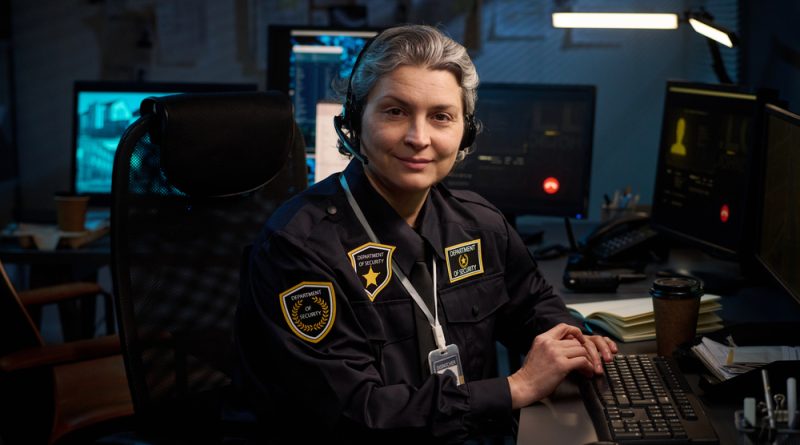
Cybersecurity Needs More Women, And The Door Is Wide Open
The future of cybersecurity will not be decided only by the sophistication of hackers. It will be decided by who chooses to stand on the other side of the attack.
That question has never felt more urgent. The recent hack of the Canvas learning platform showed how quickly a cyber incident can move from technical disruption to real-world chaos. Students had exams disrupted, grades delayed and personal information exposed. Names, email addresses, student ID numbers and private communications were swept into yet another reminder that the systems we rely on every day are only as strong as the people defending them.
At the same time, artificial intelligence is changing the speed and scale of cyber threats. Google’s Threat Intelligence Group has reported that a criminal threat actor used an AI-developed zero-day exploit, with the potential for mass exploitation. That is not science fiction. It is the next phase of cybercrime, where attackers can use automated tools to find weaknesses faster, cheaper and at greater scale than ever before.
The obvious question is whether the world has enough defenders ready for this fight.
Right now, the answer is no.
Cybersecurity has a global workforce shortage measured in the millions. Organisations need people who can investigate threats, secure systems, test defences, protect data, respond to breaches and understand how emerging technologies like AI can be used by both attackers and defenders. This is not a niche technical problem. It is a global economic, social and national security issue.
And yet, one of the most powerful solutions is still being overlooked.
Women and girls are interested in cybersecurity. According to Girls Who Code CEO Dr Tarika Barrett, around 70 per cent of teen girls say they want to work in the field. That should be a stunningly hopeful statistic. It shows that curiosity is there. Ambition is there. The desire to work in one of the most important industries of the future is there.
The problem is that too many girls and women are lost before they begin.
Interest in computer science often peaks in middle school and then falls sharply. By the time career pathways become more serious, many girls have already absorbed the message that technology is not for them, that cybersecurity is too technical, too male-dominated or too difficult to enter without a perfect coding background.
That message is wrong.
Cybersecurity is not one job. It is a whole ecosystem of careers. It needs analysts, problem-solvers, communicators, investigators, risk thinkers, policy specialists, ethical hackers, auditors, trainers, project managers and leaders. Some roles are deeply technical. Others sit at the intersection of people, business, law, privacy and technology. The field rewards curiosity, persistence and the ability to think like an attacker while acting like a protector.
Those qualities are not gendered.
In fact, cybersecurity desperately needs more perspectives, not fewer. If the same narrow group of people builds, manages and defends the digital world, blind spots become inevitable. Diverse teams are better equipped to understand how different people use technology, how scams target different communities and how security failures affect real lives.
That matters because cybercrime is not abstract. It affects students trying to submit assignments, patients relying on health systems, small businesses processing payments, families managing online accounts and workers whose personal data is stored by employers. The people defending those systems should reflect the people who depend on them.
For women considering a career change, cybersecurity should not feel out of reach. The industry is growing because the risk is growing. Every business is becoming a technology business. Every school, hospital, theatre company, retailer, bank and government agency needs cyber awareness. The demand is not limited to Silicon Valley or giant tech firms. It is everywhere.
That also means the entry points are broader than many people realise. A woman working in administration may already understand processes, compliance and data handling. A teacher may understand online safety and digital systems. A nurse or pharmacist may understand privacy and risk. A marketer may understand social engineering and how people are manipulated online. A lawyer may understand governance and regulation. A creative professional may understand storytelling, communication and user behaviour.
Cybersecurity does not require you to erase your previous experience. It allows you to build on it.
That is why training matters. The biggest barrier for many women is not ability. It is access, confidence and knowing where to start. Online learning can make that first step far less intimidating, especially for people balancing work, family, study or a career transition.
This is where practical training programmes become important. The Hack Academy’s online cybersecurity training programme offers a pathway for people who want to build real-world cyber skills and understand the threats shaping modern work. For women who have wondered whether cybersecurity might be for them, the answer should be yes, and the time to begin is now.
The Canvas hack and the rise of AI-assisted attacks should not only frighten us. They should focus us. They should make clear that the world needs more defenders, more analysts, more ethical hackers, more women in security teams and more diverse voices shaping the future of digital protection.
Cybersecurity is not just about code. It is about trust. It is about protecting people. It is about building resilience in a world where almost every part of life now depends on connected systems.
To every woman who has looked at cybersecurity and thought it sounded interesting but not meant for her, reconsider. The industry needs your intelligence, your perspective and your voice.
The attackers are not waiting. Neither should you.
Start building your cybersecurity skills today with The Hack Academy’s online training programme, and take your place in one of the most important careers of the future.
Photo Credit: DepositPhotos.com