AI Is Already Shrinking Jobs. The Smart Move Is To Invest In A Career Built For What Comes Next
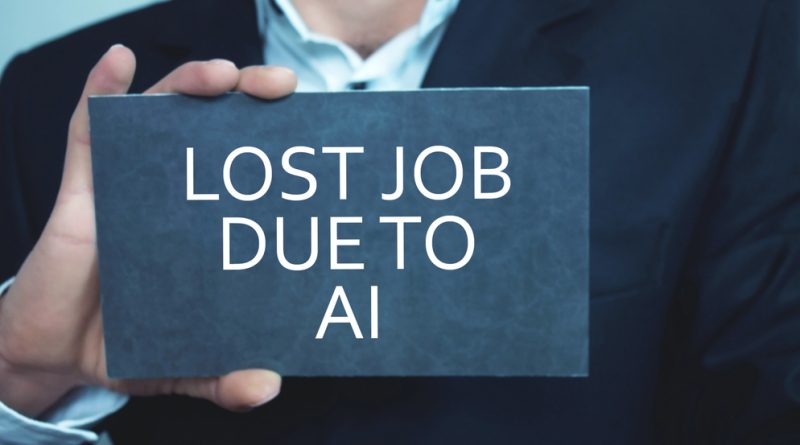
For years, workers were told not to worry too much about artificial intelligence. The common reassurance was that AI would change jobs, not replace them. It would automate tasks, not careers. It would be a tool, not a threat.
That argument is becoming harder to sustain.
New data from the Bureau of Labor Statistics has pointed to a quiet but significant shift already taking place across the workforce. A group of 18 occupations considered highly exposed to AI, representing around 10 million jobs in the United States, declined by 0.2 per cent between May 2024 and May 2025. Over the same period, overall employment grew by 0.8 per cent.
At first glance, that may seem like a small movement. It is not. It is an early warning signal.
Customer service representatives saw one of the sharpest declines, falling by 130,180 workers, a 4.8 per cent drop in just one year. When medical secretaries and assistants are removed from the data, largely because healthcare demand is pushing those numbers upward, the remaining AI-exposed occupations fell by 1.6 per cent for the second year in a row.
That is not a blip. It is a pattern.
The occupations flagged as exposed to AI include paralegals and legal assistants, graphic designers, technical writers, interpreters and translators, insurance sales agents, sales representatives, procurement clerks, credit authorisers, customer service representatives, executive assistants, legal secretaries, medical secretaries and general administrative assistants.
These are not fringe jobs. They sit inside law firms, media companies, insurers, manufacturers, sales teams, offices and corporate headquarters. They are the connective tissue of modern business.
And that is exactly why the shift matters.
The most dangerous form of disruption is not always sudden. It does not always arrive as a dramatic wave of layoffs or a company-wide restructure. More often, it arrives quietly. A team of eight becomes a team of five. A role is not replaced when someone resigns. A workflow that once needed human review at every step now only needs a person when something goes wrong.
Nobody calls it a revolution. Nobody announces that the future has arrived.
But over time, the shape of work changes.
That is what AI is doing now. It is not replacing every worker overnight. It is eating into the routine, repeatable, process-heavy parts of jobs. It is absorbing first drafts, basic customer responses, document summaries, simple translations, administrative workflows and recurring sales tasks.
The danger for workers is not simply being replaced by AI. It is staying in a role where the valuable parts are slowly stripped away.
For younger workers, the warning is even sharper. Early-career jobs have traditionally been where people learned judgment, built confidence and developed industry knowledge. But if entry-level work is automated or reduced, the pathway into many professions becomes narrower. That creates a long-term problem for workers and employers alike.
So what should people do?
The answer is not panic. It is preparation.
Workers need to start asking harder questions about their own careers. Which parts of your job are routine? Which parts could be done by tools already available today? Which tasks depend on judgment, trust, technical knowledge, communication and problem-solving? Which skills will still matter when AI handles the easy work?
The uncomfortable truth is that some careers are more exposed than others. But the hopeful truth is that some career paths are becoming more important because of AI, not less.
Cybersecurity is one of them.
As businesses adopt more AI tools, cloud platforms, automated systems and digital workflows, their attack surface grows. Every new technology creates new risks. Every automated system needs protection. Every company that moves faster with AI also needs people who understand how to secure data, networks, accounts, devices and infrastructure.
AI may reduce demand for some routine roles, but it is increasing the need for people who can think critically about digital risk.
Cybersecurity rewards the very skills that are becoming more valuable in an AI-shaped economy: analysis, judgment, investigation, problem-solving, adaptability and technical confidence. It is a field where human understanding still matters deeply, because threats evolve, attackers improvise and no two incidents are exactly the same.
This is where workers should be paying attention.
The future will not belong only to people who know how to use AI. It will belong to people who know how to operate safely, intelligently and strategically in a world transformed by AI.
That means learning how systems work. It means understanding vulnerabilities. It means recognising suspicious behaviour. It means knowing how to protect organisations from attacks that are becoming faster, smarter and more automated.
For people looking at the BLS data and wondering whether their role could be next, the message is clear: do not wait for your employer, your industry or the market to decide your future for you.
Invest in yourself now.
Build a skill set that aligns with where the economy is going, not where it has been. The jobs most exposed to AI are already showing signs of contraction. The workers with the most options will be those who move early, upskill deliberately and step into areas where demand is growing.
Cybersecurity is no longer just an IT specialisation. It is becoming a core career pathway for the AI era.
For readers ready to take that step, Hack Academy’s online training programme offers a practical way to upskill cybersecurity knowledge, build confidence and prepare for a career in one of the most important fields of the future.
Photo Credit: DepositPhotos.com