Cyber security needs to recognise the strength of Autistic thinking
For many Autistic professionals, the job market begins with a difficult calculation. Do they disclose their autism and risk being misunderstood, or stay silent and carry the burden of masking through interviews, workplaces and career progression?
That question should trouble employers more than it troubles applicants. It reveals how often recruitment systems still reward social performance over practical ability. It also shows how easily workplaces can overlook people whose strengths are highly relevant to some of the most important industries of the future.
A specialist Australian training program is helping to change that by preparing young Autistic adults for careers in technology, including cyber security, software testing, robotics, automation, data science and artificial intelligence. Its purpose is not simply to train people for jobs. It is to build a bridge between neurodivergent talent and industries that urgently need sharper, more diverse ways of thinking.
Cyber security is one of those industries. Australia, like many countries, faces a persistent shortage of skilled cyber professionals. Organisations are dealing with more frequent attacks, more complex threats and a growing dependence on digital systems. Yet the sector still too often looks for talent in familiar places and through narrow hiring processes.
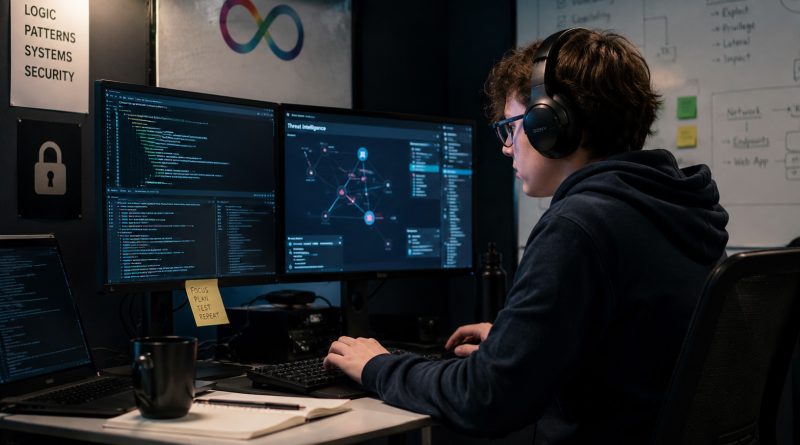
That is a mistake. Cyber security needs people who can notice patterns, follow logic, test assumptions and work patiently through complex systems. It needs people who are curious about how things operate, disciplined enough to check details and willing to keep investigating when something does not make sense.
These are areas where many Autistic people can bring powerful strengths.
Autistic thinking is often systematic, structured and detail focused. In fields such as software testing and cyber security, that can be a significant advantage. The work frequently involves rule based processes, careful documentation, vulnerability testing and the ability to identify inconsistencies others may miss. A mind that is comfortable with structure and precision can be well suited to that environment.
But this is not about reducing Autistic people to a stereotype. Not every Autistic person is technical, and not every Autistic person wants to work in cyber security. The real point is that many have been excluded from opportunities not because they lack ability, but because workplaces have failed to recognise different forms of ability.
Traditional recruitment can be a poor measure of cyber security potential. Interviews often place heavy weight on eye contact, small talk, quick verbal responses and confident self promotion. Those traits may help someone navigate an interview, but they do not necessarily show whether they can analyse a system, detect a weakness or solve a technical problem.
A more intelligent approach would assess candidates through practical tasks, structured questions and real workplace skills. It would give applicants clear expectations, allow time to process information and focus on what the job actually requires.
That shift matters for Autistic applicants because disclosure can still feel risky. Many are aware of stigma. Some worry that once they tell an employer they are Autistic, their behaviour will be interpreted through bias rather than understood in context. A direct communication style may be mistaken for rudeness. A need for routine may be seen as inflexibility. Sensory needs may be treated as inconvenience rather than a normal part of workplace design.
These assumptions waste talent.
The responsibility should not fall only on Autistic workers to adapt. Employers must also build environments where neurodivergent people can contribute without constantly masking who they are. That may mean clearer instructions, quieter workspaces, flexible routines, written communication options, practical assessments and managers who understand neurodiversity.
None of these changes weakens standards. In many cases, they improve them. Clearer communication helps everyone. Better hiring assessments produce better hires. More structured workplaces reduce confusion and lift performance across teams.
Cyber security is often discussed as a technical challenge, but it is also a human one. Firewalls, software and monitoring tools matter, but so do the people who configure them, test them and question whether something is wrong. A strong cyber workforce needs different types of minds because attackers do not all think the same way either.
The rise of training pathways for Autistic adults is a reminder that inclusion is not charity. It is capability building. It is a response to a skills shortage. It is a recognition that the cyber industry cannot afford to ignore people who may be especially well suited to the work.
For too long, many Autistic people have been asked to hide their differences to fit into workplaces that were not designed with them in mind. The better question is how workplaces can change so those differences become visible as strengths.
Cyber security needs people who are logical, persistent, curious and precise. It needs people who are willing to test systems carefully and follow evidence where it leads. For many Autistic professionals, those strengths are already there.
What has too often been missing is opportunity.
The industry needs people who think differently, notice patterns others miss, follow logic under pressure and stay curious when systems do not behave as expected. Those strengths are already in demand, and they are becoming more valuable every day as organisations face rising cyber threats and a growing shortage of skilled defenders.
Whether you are Autistic, neurodivergent, technically minded, detail focused or simply ready for a career with purpose, cybersecurity offers a pathway where your way of thinking can become your advantage.
The Hack Academy’s online training programme is designed to help you build practical skills, understand real cyber threats and gain the confidence to take your first step into the industry. You do not need to wait for the perfect opportunity. You can start building it now.
Turn your curiosity into capability. Turn your focus into a future. Start your cybersecurity career with The Hack Academy today.